This illustration is inspired by a photograph taken discreetly during a 2005 trip to Osaka, Japan. It captures two sisters preparing for a traditional day and showcases one of the woman’s fifteen beautiful pieces of traditional Japanese clothing.
The Hikizuri is a traditional Japanese kimono known for its long, flowing skirt. Primarily worn by geishas and stage performers, this kimono sweeps gracefully along the floor, creating an elegant visual effect during performances. Adorned with intricate patterns and vibrant colours, Hikizuri often feature scenes from nature or classical literature, adding to their captivating allure.
Due to its considerable length, wearing a Hikizuri requires skill. One must manage the fabric carefully to avoid tripping while allowing smooth movement. This garment showcases the wearer's training and grace, especially among apprentice geishas who wear such attire to enhance their artistic presence. The Hikizuri serves as a practical piece of cultural clothing and a symbol of traditional Japanese performance art.
Okobo shoes, often called pokkuri shoes, are traditional Japanese wooden sandals celebrated for their unique, elevated platform design.
These shoes, known as Okobo, are mainly worn by maiko, or apprentice geisha, to help them refine their graceful walking technique. The elevated platform keeps their elaborate kimonos from dragging on the ground. Typically, okobo are crafted from a single block of wood, allowing for style and functionality.
The Okobo's design features a thong that secures the foot, making it surprisingly stable and comfortable despite its height. The distinctive "clicking" sound they produce while walking has become iconic, adding to the cultural experience during traditional Japanese celebrations. With their unique design and practical qualities, Okobo remains essential to geisha attire and heritage.
I used Winsor and Newton gouache on Brighton Sea 150-gram paper for this illustration.
This illustration is inspired by a photograph taken discreetly during a 2005 trip to Osaka, Japan. It captures two sisters preparing for a traditional day and showcases one of the woman’s fifteen beautiful pieces of traditional Japanese clothing.
The Hikizuri is a traditional Japanese kimono known for its long, flowing skirt. Primarily worn by geishas and stage performers, this kimono sweeps gracefully along the floor, creating an elegant visual effect during performances. Adorned with intricate patterns and vibrant colours, Hikizuri often feature scenes from nature or classical literature, adding to their captivating allure.
Due to its considerable length, wearing a Hikizuri requires skill. One must manage the fabric carefully to avoid tripping while allowing smooth movement. This garment showcases the wearer's training and grace, especially among apprentice geishas who wear such attire to enhance their artistic presence. The Hikizuri serves as a practical piece of cultural clothing and a symbol of traditional Japanese performance art.
Okobo shoes, often called pokkuri shoes, are traditional Japanese wooden sandals celebrated for their unique, elevated platform design.
These shoes, known as Okobo, are mainly worn by maiko, or apprentice geisha, to help them refine their graceful walking technique. The elevated platform keeps their elaborate kimonos from dragging on the ground. Typically, okobo are crafted from a single block of wood, allowing for style and functionality.
The Okobo's design features a thong that secures the foot, making it surprisingly stable and comfortable despite its height. The distinctive "clicking" sound they produce while walking has become iconic, adding to the cultural experience during traditional Japanese celebrations. With their unique design and practical qualities, Okobo remains essential to geisha attire and heritage.
I used Winsor and Newton gouache on Brighton Sea 150-gram paper for this illustration.
 Image 1 of 2
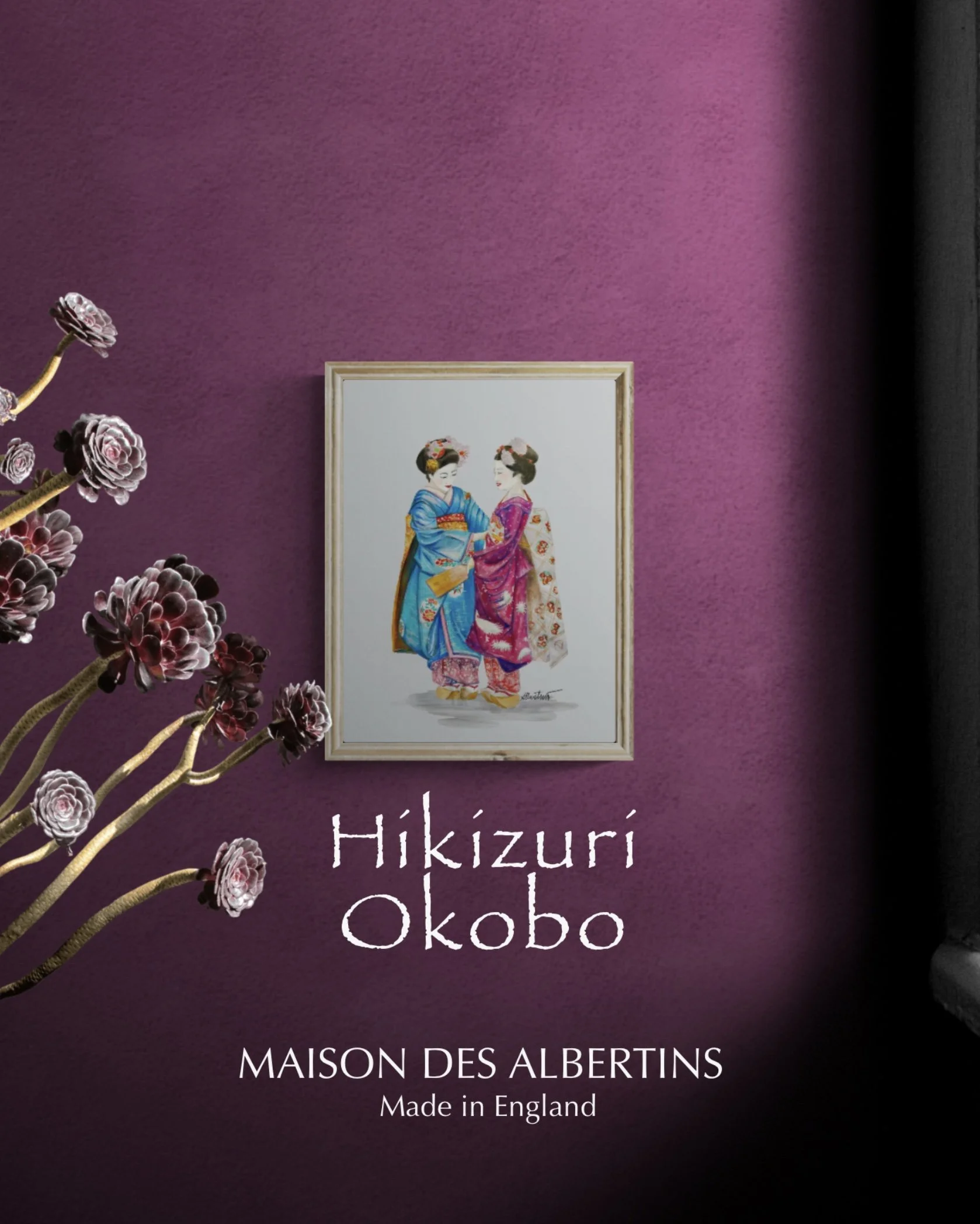 Image 2 of 2